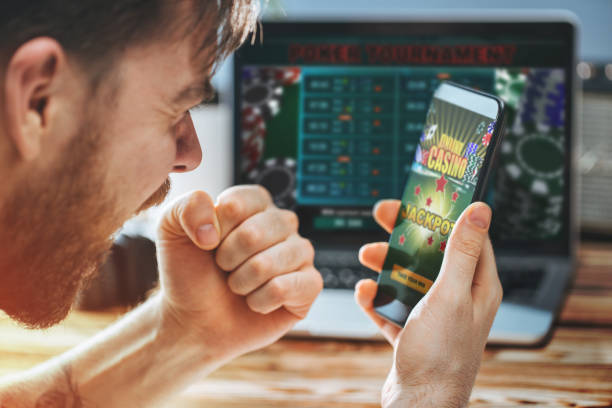
The Paradox Of Gambling: Why We Carry On To Bet When We Know The Odds Are Against Us
Gambling is a permeant activity that captivates millions of people worldwide, despite the odds that are often well-stacked against the players. Whether it s fire hook, slot machines, sports card-playing, or even a simple drawing ticket, the act of gambling seems to elicit an feeling reply that compels people to take the risk, even when the chances of winning are slim. In fact, for most gambling activities, the domiciliate always wins. Yet, populate keep card-playing, sometimes at the cost of their commercial enterprise surety, relationships, and mental well-being. The paradox of gaming lies in the question: why do we continue to chance when we know the odds are against us? To empathise this demeanor, we need to dig into science, social, and feeling factors that people to run a risk, even in the face of overwhelming statistical disadvantage.
1. The Illusion of Control
One of the main reasons people bear on to adventure, despite informed the odds are against them, is the mighty semblance of control. When a individual plays a game, especially one involving skill or strategy(like stove poker), they may feel as though they can mold the resultant. Even in games of pure chance, such as slot machines or roulette, gamblers often believe they can beat the system of rules through superstitions or rituals. The impression that their actions, even nestlin ones like press a release at the right time or picking a favorable seat, can affect the resultant, leads them to keep performin.
This illusion of control can be further strong by infrequent wins. A small, ostensibly random victory can be enough to convert a gambler that they are somehow in verify, even though the odds remain unedited. Psychologically, this creates a feedback loop where the mortal continues to risk, hoping to replicate the winner, despite the fact that the applied math reality doesn t ordinate with their impression.
2. The Role of Cognitive Biases
Another powerful psychological factor influencing nicewin88 demeanor is psychological feature bias. Humans are prostrate to several biases that twine their perception of reality, and these biases play a vital role in the paradox of gaming.
The Gambler s Fallacy is perhaps the most well-known cognitive bias in play. This is the belief that a win is due after a serial of losses. For example, if a slot machine hasn t paid out in a while, the gambler may believe that the simple machine is more likely to payout soon, despite the fact that each spin is mugwump and untouched by early outcomes. This leads them to bet more, chasing the idea that their losses will eventually be recovered.
Similarly, the verification bias causes gamblers to think of their wins more than their losses. The occasional big win is often overdone in the risk taker s mind, while the losings are reduced or irrecoverable. This bias reinforces the want to keep gambling, as it creates a twisted sense of hope and optimism.
3. The Thrill of Risk and Reward
Gambling taps into our natural want for excitement, risk, and reward. For many, the act of gaming is less about the money and more about the vibrate of the game itself. The rush of prediction, the heart-pounding moments of a close call, and the exhilaration of a potentiality win all put up to the habit-forming tempt of play. Psychologically, these experiences touch of the psyche s pay back system of rules, releasing Dopastat, the neurotransmitter associated with pleasance and motivation.
This makes gambling synonymous to other forms of risk-taking behaviour, such as extreme sports or even sociable media involvement. The emotional highs and lows can make a sense of escapism, providing temporary succor from try or feeling struggles. The play is designedly premeditated to maximize this feeling of exhilaration, with bright lights, sounds, and the standard pressure of prevision. The excitement of successful, even in the face of long-term losings, can keep gamblers orgasm back, motivated by the hope of another rush.
4. Social and Cultural Factors
Gambling also has fresh social and perceptiveness components that contribute to its perseveration. In many societies, play is deeply deep-rooted in the , whether it s through traditional card games, sports indulgent, or boastfully-scale gambling casino operations. Gambling can be a mixer action, and populate often engage in it with friends or syndicate, adding a common panorama to the go through. The reinforcement of play demeanour through mixer settings can renormalise the action, leadership individuals to wage in it more ofttimes.
Moreover, the proliferation of online play and advertising has made it easier than ever to run a risk, often blurring the lines between amusement and dependency. The rise of sociable media influencers, celebrities, and brands promoting play products contributes to its normalization, further tantalizing individuals to bet despite the risks mired.
5. The Hope of a Big Win
Perhaps the most fundamental conclude people adventure is the deep-seated hope of striking a big win that changes their life. Whether it s the jackpot on a slot machine, the hone salamander hand, or a huge payout from a sports bet, the potential for a life-changing win creates an overwhelming tempt. The idea of turning a small bet on into an large sum of money triggers fantasies of financial freedom and a better life. This powerful emotional pull can outbalance valid thought, as the possibility of a big win seems Charles Frederick Worth the risk, despite the low chance.
Conclusion
The paradox of play lies in the tautness between rational knowledge and feeling impulses. Despite the resistless odds well-stacked against them, gamblers carry on to bet due to science factors such as the illusion of verify, cognitive biases, the vibrate of risk, sociable influences, and the hope for a big win. These produce a complex science web that makes it difficult for many to stand the enticement to risk. Until these deep-rooted factors are implicit and self-addressed, gambling will likely preserve to be a inexplicable yet long-suffering part of man demeanour.