Does 8K IPTV support VOD?
The world of television has changed rapidly with the growth of internet-based streaming. Traditional cable and satellite services are increasingly being joined by IPTV platforms that deliver television content through an internet connection. 8K IPTV takes this experience further by supporting extremely high-resolution video, while many modern IPTV services also provide Video on Demand (VOD). This allows viewers to choose movies, shows, documentaries, and other programs instead of watching only scheduled broadcasts.
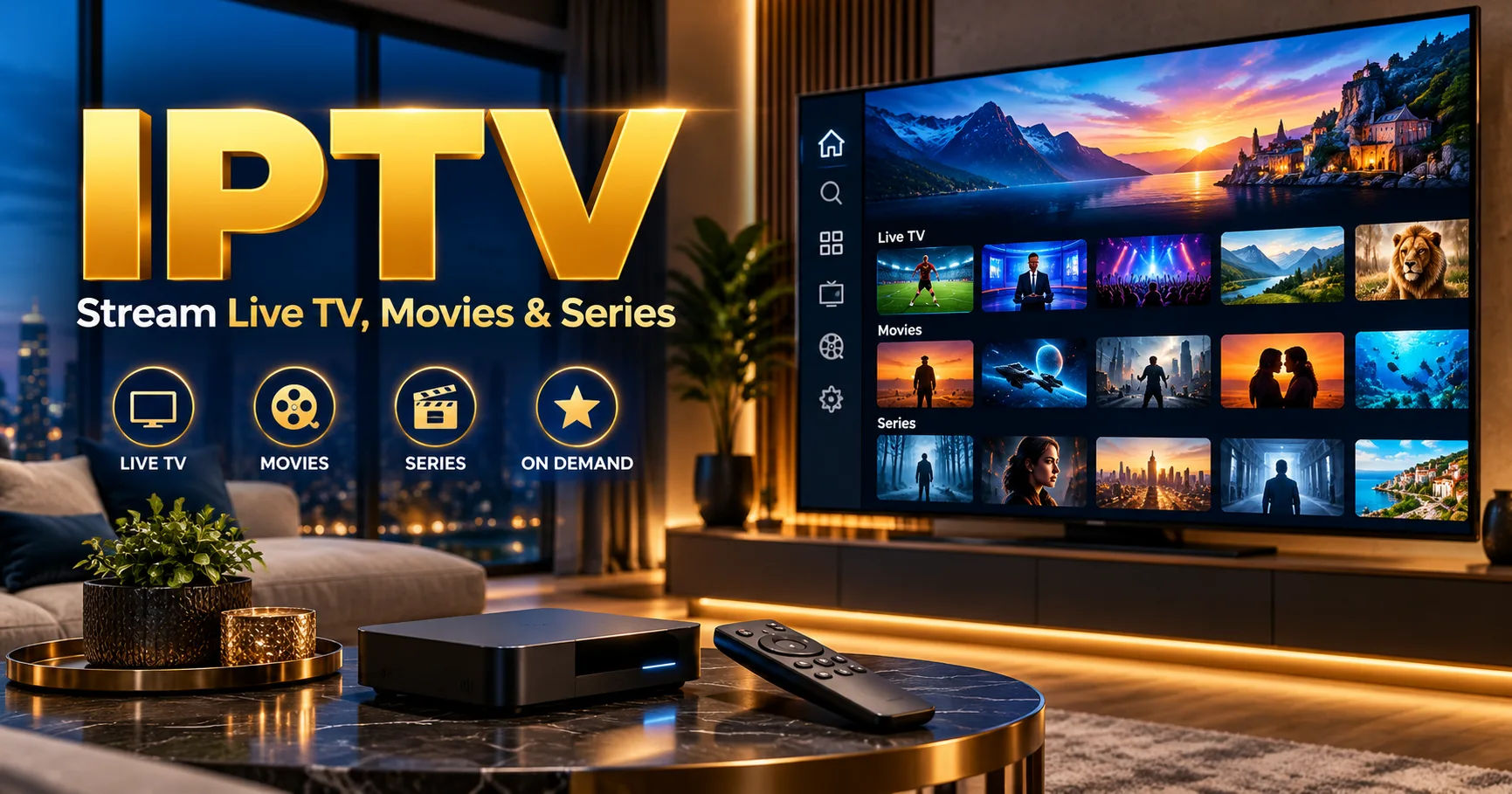
But does 8K IPTV actually support VOD? In most cases, yes. However, support for VOD depends on the IPTV service, application, subscription plan, available content, and the capabilities of the user's device and internet connection. Understanding how these elements work together can help viewers determine what they can realistically expect from an 8K IPTV service.
What Is 8K IPTV?
IPTV stands for Internet Protocol Television. Unlike traditional television systems that rely primarily on satellite signals, antennas, or cable networks, IPTV delivers television content through an internet connection.
The term "8K" refers to the resolution of the video. An 8K image typically has a resolution of 7680 × 4320 pixels. This provides approximately four times as many pixels as 4K and sixteen times as many pixels as Full HD.
An 8K IPTV service may offer live television channels, movies, television programs, sports, documentaries, and other forms of digital entertainment. The exact features vary between providers.
Because 8K video contains a huge amount of visual information, it requires more processing power, bandwidth, storage, and efficient video compression than lower-resolution formats.
What Is VOD in IPTV?
VOD means Video on Demand. It is a feature that allows viewers to select and watch content whenever they want.
Traditional television generally follows a fixed schedule. If a movie starts at 8 p.m., viewers need to watch it at that time unless they record it.
VOD works differently. A viewer can open the available library, select a title, and start playback when convenient.
A typical IPTV VOD library may include:
- Movies
- TV series
- Documentaries
- Children's programs
- Educational content
- Sports-related videos
- Entertainment programs
- Previously broadcast content
The availability of these categories depends entirely on the IPTV provider and its licensing arrangements.
Does 8K IPTV Support VOD?
Yes, 8K IPTV can support VOD.
There is nothing about 8K resolution that prevents an IPTV platform from offering on-demand content. In fact, IPTV technology is well suited to VOD because both live streams and on-demand videos can be delivered through internet protocols.
However, there is an important distinction between technical capability and actual service availability.
An IPTV system can technically deliver 8K VOD, but that does not mean every IPTV subscription includes an extensive library of 8K movies and shows.
Some services may advertise 8K compatibility while offering most of their VOD content in 1080p or 4K. Others may provide a smaller collection of high-resolution titles.
Therefore, viewers should check the provider's actual VOD catalog rather than assuming that every available video will automatically be 8K.
How Does 8K VOD Work?
When a viewer chooses an on-demand video, the IPTV application sends a request to the service's server.
The server then delivers the selected video through the internet connection.
For an 8K movie, the server needs to provide a large amount of video data. The user's device receives and processes this data before displaying the picture on an 8K-compatible screen.
The basic process involves several stages.
Selecting the Content
The viewer opens the IPTV application and enters the VOD section.
The available categories and titles are displayed. Depending on the service, users may be able to search by title, genre, language, release year, or other filters.
Requesting the Video
After selecting a movie or program, the application communicates with the IPTV server.
The server identifies the requested content and begins delivering the video stream.
Streaming the Video
The content is transmitted through the internet connection.
Modern streaming systems can adjust video quality depending on available bandwidth and device performance. This can help prevent interruptions when network conditions change.
Displaying the Content
The receiving device decodes the video and sends the resulting image to the television or display.
For genuine 8K playback, the television and the rest of the playback chain need to support the appropriate resolution and video formats.
Does Every VOD Movie Come in 8K?
No.
This is one of the most important points to understand.
The resolution of an IPTV service does not automatically determine the resolution of every piece of content in its VOD library.
A provider might support 8K streaming but have a library containing different resolutions, such as:
- 720p
- 1080p
- 1440p
- 4K
- 8K
Content availability depends on what the provider has obtained, produced, encoded, and made available.
There is also a practical limitation: relatively little mainstream video content is produced and distributed natively in 8K compared with 1080p and 4K.
As 8K production and distribution become more common, the availability of native 8K VOD may increase.
Internet Requirements for 8K VOD
Internet speed is particularly important when streaming very high-resolution video.
An 8K stream contains substantially more data than a Full HD stream. The exact bandwidth required depends on the codec, bitrate, frame rate, compression technology, and streaming platform.
A fast connection alone is not always enough.
The connection also needs to be stable. Network congestion, Wi-Fi interference, packet loss, and high latency can affect playback quality.
Wired Connections
An Ethernet connection can be useful for high-resolution streaming because it can provide a stable connection between the router and playback device.
This can be especially helpful when a television or streaming device is located close enough to the router for a practical wired setup.
Wi-Fi Connections
Modern Wi-Fi technologies can also support high-bandwidth streaming under suitable conditions.
However, performance can vary depending on distance from the router, walls, interference, router capabilities, and the number of connected devices.
For demanding 8K streaming, a strong and stable network is more important than simply having a high advertised internet speed.
Device Compatibility Matters
A reliable 8K IPTV experience requires more than an IPTV subscription.
The television or display should support 8K resolution. The playback device must also be capable of decoding the relevant video format.
The IPTV application is another important component.
Some applications may support certain resolutions or codecs while others may have limitations. Users should therefore check the specifications of their television, streaming box, IPTV application, and subscription service.
An older device may still play the same VOD content, but it may display the video at a lower resolution.
What Video Codecs Are Important?
Video codecs are technologies used to compress and decompress video.
Without efficient compression, extremely high-resolution video would require enormous amounts of bandwidth and storage.
Common modern codecs include H.264, H.265/HEVC, and newer technologies such as AV1. Compatibility varies between devices and services.
For 8K streaming, efficient compression is particularly valuable because it can reduce the amount of data required while maintaining visual quality.
However, both the IPTV service and playback hardware must support the selected codec.
Benefits of VOD on IPTV
VOD provides several advantages compared with traditional scheduled television.
Watch Content at a Convenient Time
Viewers do not have to wait for a particular broadcast time.
They can select content when they are ready to watch.
Large Content Libraries
A VOD platform can provide access to a large collection of movies and programs from a single interface.
The size of the library depends on the provider.
Flexible Viewing
VOD can be useful for families because different people can choose different programs instead of following one television schedule.
High-Resolution Entertainment
When native high-resolution content is available, viewers with compatible equipment can experience detailed images and greater visual clarity.
This can be especially noticeable on large screens.
Does 8K Always Look Better?
Higher resolution can provide greater detail, but resolution is not the only factor that determines picture quality.
Bitrate, compression, color depth, HDR support, source quality, frame rate, and display technology can all affect the final image.
For example, a poorly compressed 8K video may not look as impressive as a high-quality 4K video.
Viewing distance also matters. The benefits of higher resolution can become less noticeable when viewers sit far away from the screen.
Therefore, consumers should consider the entire viewing setup rather than focusing only on the "8K" label.
Common Problems With 8K IPTV VOD
Although VOD can be convenient, users may experience technical issues.
Buffering
Buffering can happen when the stream requires more data than the connection can consistently provide.
Reducing network congestion or improving the connection can sometimes resolve the problem.
Limited 8K Content
A service may support 8K technically but offer only a limited number of native 8K titles.
Users should check the actual catalog before subscribing specifically for 8K VOD.
Device Limitations
A television or streaming device may not support the necessary resolution or codec.
This can prevent native 8K playback.
Application Compatibility
Different IPTV applications have different capabilities. An application may not support every video format offered by a provider.
Server Performance
Streaming quality can also depend on the provider's infrastructure. If servers are overloaded or the service has insufficient capacity, playback may suffer.
How to Choose an IPTV Service With VOD
Anyone interested in 8K IPTV should examine several factors before choosing a service.
First, check whether VOD is actually included in the subscription.
Next, determine what percentage of the library is available in native 8K rather than simply being advertised as 8K-compatible.
It is also useful to check whether the service supports the device you plan to use.
Look at the supported codecs, streaming quality options, VOD categories, application compatibility, and network requirements.
Most importantly, users should consider whether the provider has appropriate rights to distribute its content in their region. Legitimate licensing is an important part of choosing an IPTV service.
Is 8K VOD Worth It?
Whether 8K VOD is worthwhile depends on the viewer's equipment, internet connection, viewing habits, and the actual content available.
Someone with a large 8K television, a capable streaming device, a stable high-speed connection, and access to genuine 8K content may benefit from the technology.
For another viewer, 4K VOD may provide a more practical experience because there is considerably more 4K content available and the bandwidth requirements are lower.
The important point is to look beyond the marketing label.
A service offering an "8K" option does not necessarily mean that its entire VOD catalog is available in native 8K.
Future of 8K IPTV and VOD
The relationship between IPTV and VOD is likely to remain important as internet-based entertainment develops.
Better compression technologies, faster internet networks, improved displays, and more powerful streaming hardware can make high-resolution streaming easier to deliver.
Content producers may also continue experimenting with higher-resolution production.
As the ecosystem develops, more VOD platforms could potentially offer native 8K movies, documentaries, sports recordings, and other programs.
However, widespread 8K adoption will depend on factors such as production costs, bandwidth requirements, consumer demand, storage, device availability, and content distribution infrastructure.
Conclusion
So, does 8K IPTV support VOD? Yes, it can. IPTV technology is capable of delivering on-demand video alongside live television, and the VOD content can theoretically be delivered in 8K resolution when the provider, content, network, application, and playback equipment all support it.
However, users should not assume that every IPTV service with 8K compatibility provides a large library of native 8K VOD. Many services can support different resolutions, and the actual availability of 8K content depends on the provider's catalog and technical infrastructure.
For the best experience, viewers should consider internet stability, device compatibility, supported codecs, display resolution, streaming quality, and the provider's legitimate content rights. These factors are just as important as the advertised resolution.
Ultimately, VOD is one of the most useful features of IPTV because it gives viewers control over when they watch their chosen programs. As high-resolution technology continues to develop, the combination of IPTV, VOD, and 8K displays could provide increasingly detailed and flexible home entertainment experiences.